 Thinking in Public
Two doors: an intense shared emotion, or seeing the same people over and over. Run clubs open both at once.
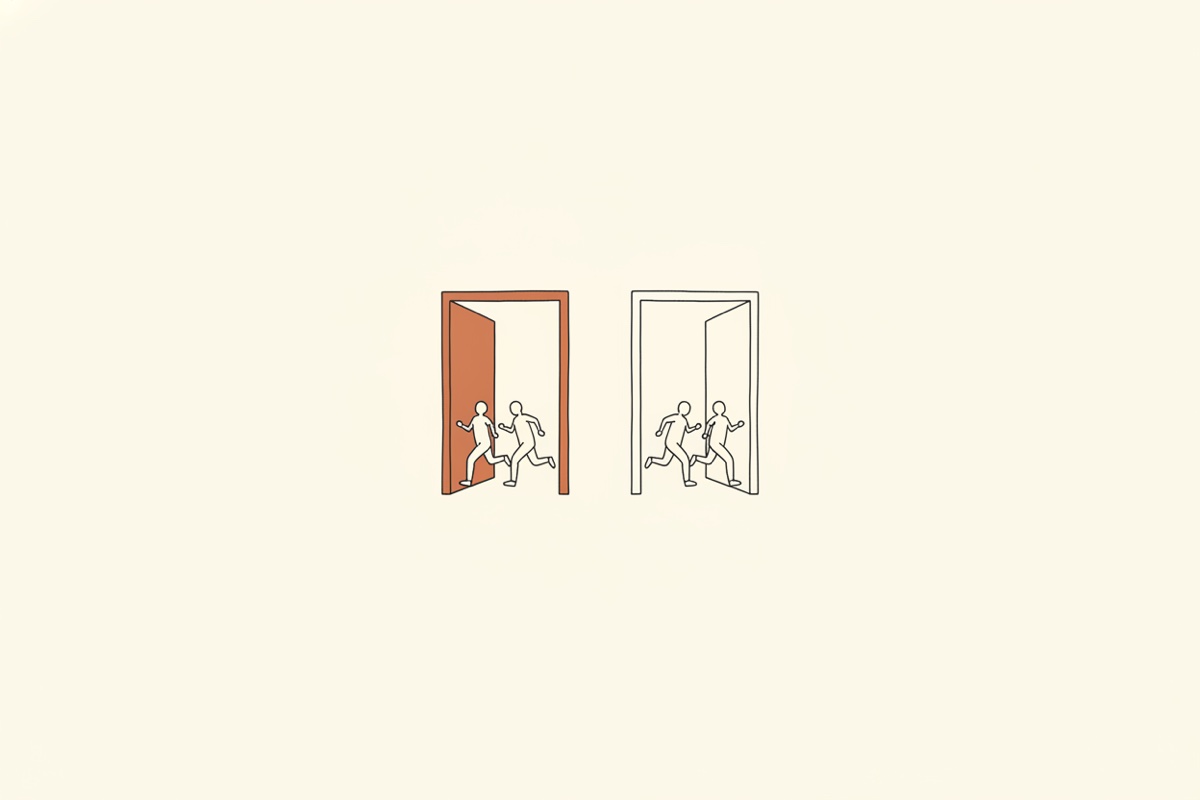
There are two doors into friendship.
One is an intense emotional experience. You both watch an accident happen. You both laugh so hard neither of you can breathe. Moments like that fuse people together fast — adrenaline included.
The other is continuity. You see the same people over and over — same gym, same coffee shop, same commute — until familiarity turns into something warmer.
Two doors — most friendships only ever get one of them open
This is why run clubs work so well for making real connections. You get both doors at once. The run itself is adrenaline — shared effort, shared discomfort, shared finish line. And you see the same faces every week, so continuity opens right behind it. Running as a team fuses the two mechanisms most friendships only get one of.
So find those opportunities on purpose. Join the thing that repeats. Look for the moment that spikes. Do both if you can — that's the run club effect, and it works well past running.
Psychologists have a name for door two: the mere exposure effect. Robert Zajonc described it in a 1968 paper. The more often you run into something, the more you tend to like it. Research on friendship shows the same pattern. In a 1950 study, Festinger, Schachter and Back found that people who lived or worked close to each other, and so met often, tended to become friends. In a 2008 study, students were assigned seats on the first day of class, and where they sat predicted who became friends a year later (Simply Psychology).
Nobody had to plan anything. They kept being in the same place. Pick one weekly thing, a run, a class, a table at the same cafe, and keep showing up.