 Thinking in Public
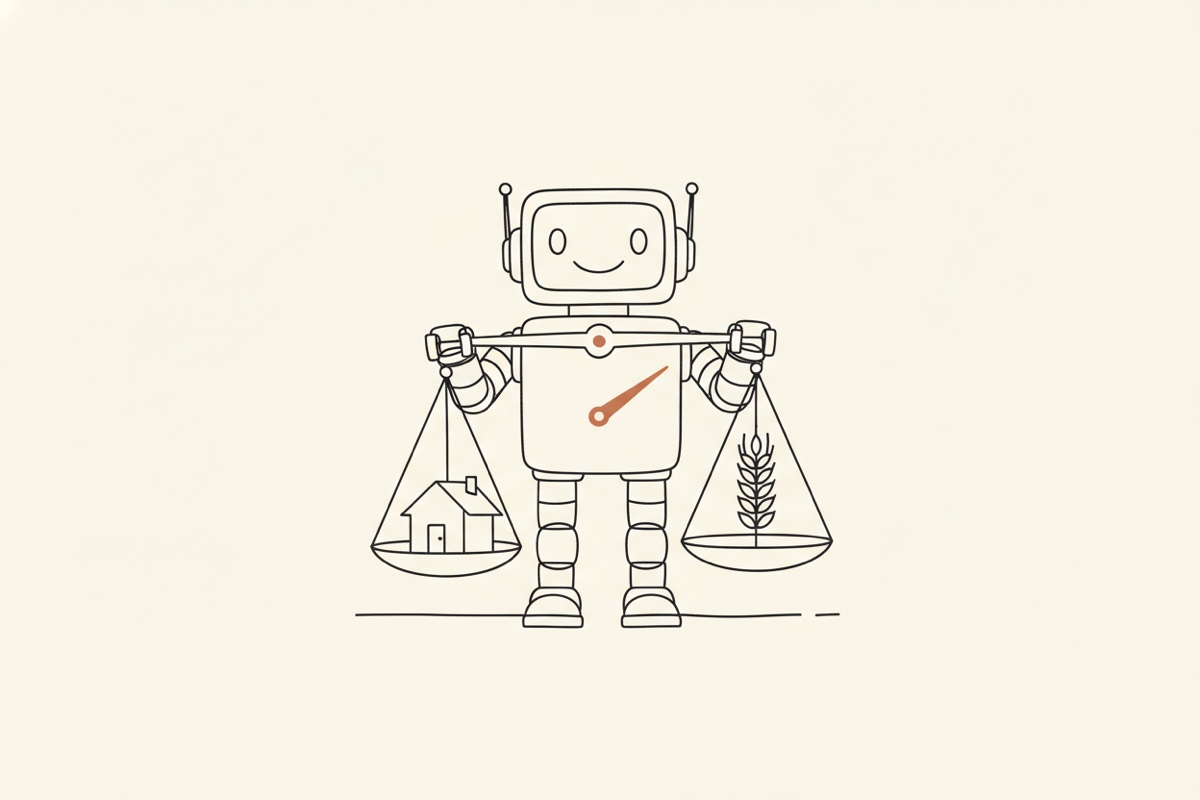
Here's a what-if. The kind of thing worth being a visionary about instead of dismissing.
What if society (us) categorized itself based on needs, and we balanced each one with robots? Housing. Food. Care. Energy. Robots assigned directly against the things people actually need, at the scale a robot doesn't get tired at. That's how you solve world hunger: put the growing, harvesting, and distributing on machines that never stop.
And if Elon's right that basic income becomes the answer once robotic labor is doing the base work — food grown, houses built, people cared for — then the real question is what's the opportunity inside it. Someone still has to build the thing that builds everything else.
Print, frame, and assemble on-site around the clock — the bottleneck stops being skilled labor hours.
Growing, harvesting, and prep run at machine pace — hunger becomes a distribution problem.
The physical load of eldercare and basic health support gets covered so human attention goes to the parts machines can't do.
Robots build and service the panels, lines, and batteries that power the other three.
The base layer — four needs, four fleets, running in parallel
Run that base layer at scale and you get surplus — more housing, food, care, and energy than the robots' own upkeep costs. That surplus is what funds the basic income — output redistribution, from machines that don't need a paycheck.
The opportunity — the loop needs someone at every stage, and none of those seats exist yet
That last box is where I'd point anyone asking "what do I actually build." Somebody has to design the robot farms and the robot housing crews. Somebody has to run the distribution layer that gets the output to the right door. And somebody has to build the trust layer — the verification that a robotic crew actually built the house to code, that the food was actually grown clean, that the care aide actually did its rounds. That's three or four industries that don't have a name yet.
I don't know if this is exactly how it plays out. I do think the shape is close: needs get categorized, robots get pointed at them, and the money follows the output instead of the hours.
What are your thoughts? How do you think it pans out? Send me an email if you have some future-based ideas — hi@arce.ca.